When companies source components across borders, the lowest quoted price rarely tells the whole story. Custom part fabrication lets buyers specify geometry, materials, finishes, and tolerances for a real application. A machined aluminum bracket, for example, may require countersunk holes, a protective coating, and consistent dimensions. Small details matter. They can affect assembly time, product life, and whether parts fit without rework.
Working with a capable fabrication supplier can also improve communication between design and production. Buyers can share drawings, review material options, and request a prototype before approving a larger run. Clear specifications help prevent avoidable misunderstandings, especially when teams use different measurement systems or communicate across time zones. Ask how the supplier checks critical dimensions, manages revisions, and documents material quality. These are practical questions, not paperwork for its own sake.
Global sourcing still involves trade-offs. Freight costs, lead times, and inspection arrangements may offset a lower unit price. A good supplier relationship cannot remove every risk, and a sample does not guarantee that every production part will match. That deserves attention. Compare total landed cost, agree on realistic tolerances, and decide who will inspect parts before shipment. With careful planning, custom fabrication can give companies greater control over fit, function, and production choices. It is not automatically the best route; the right choice depends on the component, order volume, and support available from the supplier.
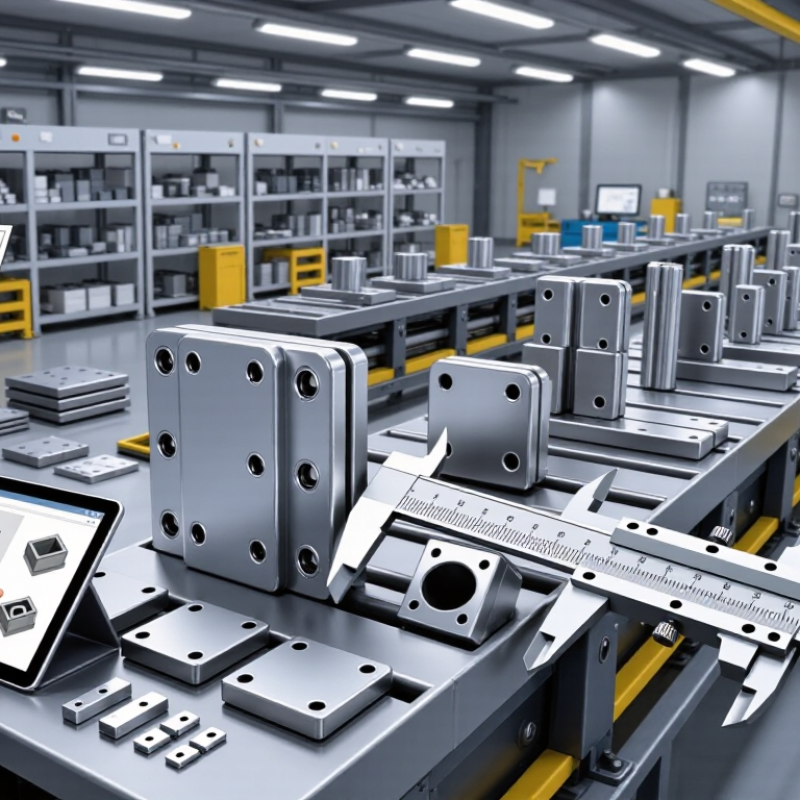
Custom part fabrication produces components to a buyer’s geometry, material, and performance requirements. Rather than choosing a standard catalog item, the buyer defines what the part must do and how it must fit. A specification may include a CAD file, dimensions, tolerances, surface finish, material grade, and expected production volume. These details help a manufacturer select a process, such as CNC machining, sheet-metal forming, casting, or additive manufacturing. Fit matters. Each process has different limits, costs, and lead times, so a feasible design may still need adjustment for reliable production.
In global sourcing, custom fabrication connects product teams with manufacturing partners in different regions. Clear drawings, agreed measurement methods, and material records help reduce ambiguity across distance and time zones. Some details are easy to miss. A drawing can leave room for interpretation, especially around edge breaks, thread depth, or cosmetic marks. Requesting a first-article sample and checking critical dimensions before full production can reveal issues early. Buyers should also compare packaging, shipping time, and repeat-order capability, not just the quoted unit price. Even a carefully reviewed sample cannot guarantee every later batch will be identical, so inspection criteria and communication need to remain practical and consistent.
Why Choose Custom Part Fabrication for Global Sourcing?
How Buyer Requirements Shape a Fabrication Plan
A fabrication plan should begin with the buyer’s drawing, application, and delivery needs—not a generic process list. Specify material grade, tolerances, finish, annual volume, and inspection records. A tight tolerance on a mating surface may require precision machining, while a simple bracket may suit laser cutting and bending. These choices affect tooling, lead time, and landed cost. Small omissions matter. A missing datum or unclear surface-finish note can trigger rework across borders.
Workforce capacity also shapes sourcing decisions. Deloitte and the Manufacturing Institute’s 2024 study projected that U.S. manufacturing may need 3.8 million workers by 2033, with 1.9 million jobs potentially unfilled. This is a U.S. forecast, not a global labor measure, but it highlights why buyers should verify a supplier’s available skills and inspection capacity. Ask how first-article checks, material traceability, and change approvals are handled. The answer should be documented, not merely promised.
Tips: Send a complete 3D model and a controlled drawing revision. Flag critical dimensions, acceptable substitutions, and packaging needs. Request a sample inspection report before approving production. One caveat: more inspection is not always better; focus checks on features that affect fit, safety, or service life.
How buyer requirements shape material and fabrication plans
Material choice affects part weight, machining approach, and sourcing options. Typical room-temperature densities are shown in g/cm³; actual values vary by grade and condition. Confirm the exact material specification with the supplier.
A custom part moves from a drawing to production through a series of practical decisions. Engineers review the CAD model, material, tolerances, and how the part will be made. The awkward part: a clean model can still hide a tool-access problem. A design-for-manufacturing review can catch issues such as thin walls, deep pockets, or unnecessarily tight tolerances before they become costly. A prototype then tests fit and function. Sometimes it reveals that the original design needs rework.
After approval, the supplier prepares production tooling and defines inspection points for critical dimensions. A first-article check can compare the finished part with the drawing before larger quantities are released. Keep revision numbers, material records, and inspection results together; small paperwork gaps can slow repeat orders. McKinsey’s 2020 report, Risk, Resilience, and Rebalancing in Global Value Chains, found that major supply-chain disruptions occur about every 3.7 years on average. It also estimated that severe disruptions can cost companies 45% of one year’s profits over a decade. That makes clear specifications and qualified alternatives valuable, not optional polish. Production rarely follows a perfect line. A measured adjustment may be wiser than rushing a questionable design forward.
| Stage | Key Activities | Typical Outputs | Sourcing Considerations | How It Supports Production |
|---|---|---|---|---|
| 1. Define the part and requirements | Specify the part’s function, operating environment, material needs, critical dimensions, finish, and applicable regulatory requirements. | Part requirements, initial drawings or models, and acceptance criteria. | Clear requirements help potential suppliers assess capability and quote on a consistent basis. | Reduces ambiguity before design review and supplier selection. |
| 2. Prepare production-ready design data | Create or refine a 2D drawing and 3D model. Identify tolerances, datums, threads, surface finishes, and other features that affect inspection or manufacturing. | Revision-controlled drawings, CAD files, and a bill of materials when needed. | Use standard units and formats, and make sure suppliers receive the same approved revision. | Gives manufacturing and inspection teams a shared technical reference. |
| 3. Review manufacturability and process options | Evaluate whether the geometry and requirements suit processes such as CNC machining, sheet-metal fabrication, casting, molding, or additive manufacturing. | Manufacturing feedback, proposed process, and identified design or cost trade-offs. | Compare suppliers by relevant process capability, equipment, materials, and quality controls—not price alone. | Can reveal opportunities to simplify features, reduce waste, or make inspection more practical. |
| 4. Confirm material and sourcing plan | Verify material grade, form, finish, and any required certificates. Confirm sourcing responsibilities and approved substitutions. | Material specification, purchasing plan, and documentation requirements. | Material availability, local standards, import requirements, and traceability needs may differ across regions. | Helps align the purchased material with design and compliance requirements. |
| 5. Validate with a sample or first article | Produce representative parts and inspect key dimensions, fit, function, material, and finish against the approved requirements. | Sample parts, inspection results, and documented design or process changes if required. | Agree on inspection methods, measurement units, and approval criteria before production release. | Checks that the design and manufacturing approach work together before routine production. |
| 6. Release and control production | Approve the production revision, establish process controls, and monitor inspection and nonconformance records. | Production order, controlled specifications, and quality records appropriate to the part. | Set expectations for change notification, lot identification, packaging, and corrective action. | Supports repeatability and makes changes easier to review and trace. |
| 7. Package, ship, and receive globally | Protect parts during transport, prepare shipping and customs documents, and inspect received goods according to the agreed plan. | Packaged parts, shipment documents, and receiving inspection records. | Account for transit protection, delivery terms, customs classification, and destination-country requirements. | Connects the manufacturing release to usable inventory at the destination. |
Note: The appropriate process, documentation, inspection plan, and shipping arrangements depend on part geometry, material, quantity, end use, and destination. Confirm requirements with qualified manufacturing and logistics providers.
Custom part fabrication can make global sourcing more adaptable. A buyer can specify material, tolerances, and finish, then compare qualified suppliers across regions. This is useful when a standard component is unavailable or shipping delays disrupt replenishment. Small details matter: a revised hole pattern may let a local shop produce a replacement bracket without waiting for a full container.
The exposure is significant. UNCTAD’s Review of Maritime Transport 2024 reports that over 80% of world trade by volume moves by sea.
McKinsey Global Institute’s 2020 analysis estimates that supply-chain disruptions can cost an average company 42% of one year’s profits over a decade. Custom fabrication cannot remove that risk. It can, however, support alternate sourcing when drawings, inspection criteria, and material specifications are clear.
The practical work starts before an order is placed. Share controlled drawings, confirm the supplier’s measurement process, and approve a first article before scaling production. A machined sample may fit on paper but fail after coating. That happens. Regional fabrication can shorten some replenishment routes, while qualification and tooling still take time. Keep those trade-offs visible, and avoid treating “local” as a substitute for verified quality.
Custom part fabrication can simplify global sourcing when standard components fail a real production need. The right supplier should understand drawings, tolerances, material behavior, and delivery constraints. Ask for evidence from comparable work, not polished promises. A useful evaluation begins with sample parts, inspection records, and clear change-control procedures. During a factory review, check measuring equipment, operator training, and how nonconforming parts are isolated. Small details matter. A mislabeled batch can delay an entire assembly.
Cost deserves more than a low unit quote. Compare tooling, setup, packaging, freight, inspection, and possible rework. Request a transparent cost breakdown. Quality should be tested against measurable requirements, including surface finish, hardness, dimensional limits, and first-article approval. Risk also includes capacity, raw-material availability, communication gaps, and dependence on one production site. A supplier that reports problems early may be safer than one that always says yes. I have seen schedules suffer because optimistic capacity figures were accepted without checking machine loading. The scorecard helps, but it is not perfect.
Tips: Use a weighted supplier scorecard. Assign points for quality history, technical response, cost clarity, capacity, and corrective-action speed. Approve a small pilot order before scaling. Pilot orders reveal weaknesses. Keep revision-controlled drawings and written acceptance criteria. Review delivery data monthly. If a supplier resists basic documentation, pause the decision. Cheap can become expensive quickly.