
Projects

Top 10 Plastic Cup Lids Making Machines for Global Buyers

The global market for plastic packaging is becoming more technical, measurable, and demanding. Plastics Europe reported global plastics production of approximately 413.8 million tonnes in 2023. Packaging remained one of the largest application areas. Meanwhile, Smithers continues to identify lightweighting, recycled content, and production efficiency as major packaging trends.

These changes make the Plastic Cup Lids Making Machine an important investment for international buyers. A suitable machine must deliver stable forming, accurate cutting, low material waste, and consistent sealing performance. It should also support different lid shapes, thicknesses, polymers, and production volumes. Small details matter. A poorly adjusted heating zone can create cloudy surfaces or weak edges. Excessive trimming can leave kilograms of scrap beside the production line.

Quality-management expert W. Edwards Deming stated, “Quality comes not from inspection, but from the improvement of the production process.” His principle remains practical for thermoforming factories. Buyers should examine cycle time, mold-change design, temperature control, automation, maintenance access, and after-sales support. Certifications and technical documents also deserve careful review. Marketing claims alone are not enough.

This guide introduces ten Plastic Cup Lids Making Machine options for global buyers. The comparison considers output capacity, forming accuracy, energy use, customization, and long-term serviceability. It is a useful starting point, not a final verdict. Factory conditions differ. A machine that performs well in one plant may require different tooling, cooling, or automation elsewhere. That uncertainty should be tested through samples, factory audits, and transparent performance data.
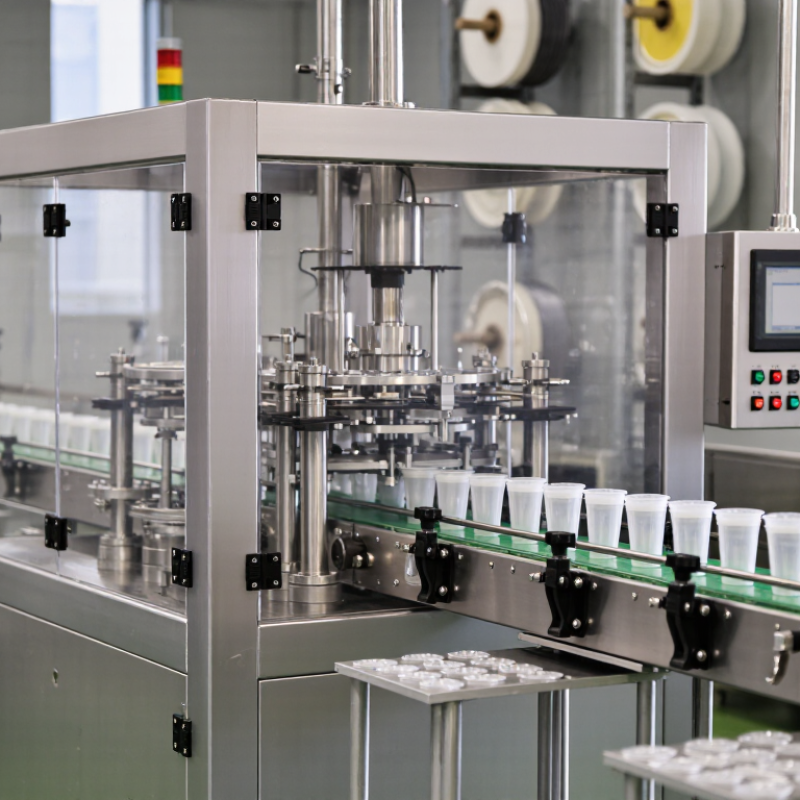
Top 10 Plastic Cup Lids Making Machines for Global Buyers

PlasticsEurope 2022: Global Plastics Production Reached 400.3 Mt

PlasticsEurope reported that global plastics production reached 400.3 million tonnes in 2022. This scale shows why efficient processing matters across packaging supply chains. However, total production does not equal sustainable progress. Cup-lid manufacturers still need to reduce scrap, energy use, and unnecessary material thickness.

Material choices matter. Common lid-making machines use thermoforming or injection molding, depending on design and output targets. Thermoforming can suit lightweight lids with consistent wall thickness. Injection molding may support sharper features and stronger fit. Recycled content can reduce reliance on virgin resin, but it may affect clarity, odor, and processing stability. Practical trials remain essential.

Top 10 machine evaluations should include more than advertised speed. Check mold temperature control, cycle consistency, trimming accuracy, and compatibility with approved food-contact materials. Measure rejected lids during extended production, not only during a short demonstration. Inspect stacking, sealing, and opening force with real cup sizes. Small details matter.

Energy monitoring also deserves attention. A machine using less electricity per thousand lids can reduce operating costs over time. Maintenance access is equally important, especially around heaters, molds, sensors, and cutting units. Experienced operators often find problems before automated reports do. That human judgment still matters. Yet relying on experience alone can hide inconsistent measurements, so documented testing and independent quality checks should support every purchasing decision.

Packaging Benchmark: About 40% of Plastics Demand Serves Packaging

Top 10 Plastic Cup Lids Making Machines for Global Buyers

Packaging Benchmark: About 40% of Plastics Demand Serves Packaging

Packaging consumes a major share of global plastics demand, often estimated at about 40%. This figure changes by region and reporting method. Still, it shows why cup lid production deserves careful investment.

For global buyers, the top ten machine choices usually include injection molding systems, thermoforming lines, compression molding equipment, and integrated trimming units. Each option serves different lid designs, materials, and production volumes. Injection molding can create precise drinking openings and stacking features. Thermoforming may reduce material use for lightweight lids. Speed matters, but consistency matters more.

Speed matters, but consistency matters more.

Small defects become expensive quickly. A warped lid can leak beside a full cup. Poor trimming can leave sharp edges. Experienced buyers inspect cycle stability, mold cooling, servo control, and reject rates. They also check whether operators can clean the machine without long downtime. A bright control panel means little if maintenance is difficult.

The 40% benchmark can guide planning, not replace factory data. Local electricity costs, resin supply, labor skills, and recycling targets affect the real decision. A high-output line may look efficient on paper. It may perform poorly with unstable material quality. That is an uncomfortable point, but it deserves attention. Buyers should request sample runs, measured cycle times, and lid fit tests before signing an order. Numbers need proof.

Material Guide: PP, PE, and PET Properties for Cup-Lid Production

Top 10 Plastic Cup Lids Making Machines for Global Buyers

Material Guide: PP, PE, and PET Properties for Cup-Lid Production

Choosing a cup-lid machine starts with the resin, not the machine catalog. PP offers good stiffness, heat resistance, and fatigue performance for snap-on lids. It suits hot-drink applications when the design and grade are properly validated. PP also supports thin walls, but excessive cooling can cause warpage.

PE is softer and more flexible. It can work well for squeeze-friendly lids or components needing impact resistance. However, its lower stiffness may produce loose fits on some cup rims. PET provides excellent clarity and a clean surface appearance. It is commonly selected for transparent lids, though it needs careful drying before processing. Moisture can create bubbles, brittleness, or reduced strength.

Machine selection must match these behaviors. Thermoforming lines need stable sheet heating, accurate plug assistance, and controlled cooling. Injection systems require suitable screw design, mold ventilation, and precise temperature control. Do not compare output speed alone. A fast machine can still create uneven sealing rings and visible stress marks.

Small trials matter.

Measure lid weight, rim fit, clarity, and drop performance. Check the actual cup, not only a laboratory sample. In production, minor material changes can disturb cycle time and stacking. A material chart helps, but it never replaces testing. Even experienced teams sometimes overlook cooling balance. That mistake is expensive to correct later.

Top 10 Plastic Cup Lids Making Machines for Global Buyers - Material Guide: PP, PE, and PET Properties for Cup-Lid Production

Comparison of common machine configurations, production ranges, material compatibility, and practical selection factors for plastic cup-lid manufacturing

Rank Machine Type Typical Process Compatible Materials Typical Output Range Suitable Cup-Lid Applications Important Operating Parameters Main Advantages Key Buyer Considerations
1 Automatic Roll-Fed Thermoforming Line Plastic sheet is unwound, heated, formed with a mold, trimmed, and stacked automatically. PP PET PE Approximately 20,000–90,000 lids per hour, depending on mold cavities and cycle time. Flat drink lids, dome lids, dessert lids, snap-on lids, and high-volume food-service lids. Sheet thickness commonly 0.25–0.80 mm; heating temperature must be matched to the polymer; forming pressure is commonly supplied by compressed air and/or vacuum. High automation, consistent trimming, fast mold changes on suitable designs, and efficient multi-cavity production. Requires stable sheet quality, adequate compressed air, reliable scrap handling, and sufficient floor space.
2 Inline Extrusion Thermoforming Machine Pellets are melted and extruded into sheet, which is formed and trimmed in the same production line. PP PET Approximately 15,000–70,000 lids per hour. Large-volume beverage lids, yogurt lids, snack-cup lids, and thin-wall disposable lids. Extrusion temperature profile, melt filtration, sheet thickness control, mold cooling, and forming cycle must be synchronized. Eliminates separately purchased sheet, reduces sheet-handling steps, and allows direct control of sheet thickness. Higher initial investment and more complex process control than a standalone sheet-fed line.
3 Injection Molding Machine with Multi-Cavity Lid Mold Molten polymer is injected into a cooled mold and ejected as finished lids. PP PE Approximately 10,000–100,000 lids per hour, depending on cavity count and cycle time. Rigid snap-on lids, drinking lids, resealable lids, threaded lids, and lids requiring accurate sealing features. Clamping force, injection pressure, melt temperature, mold cooling, gate design, and cycle time are critical. Excellent dimensional accuracy, repeatable sealing features, and strong control of ribs, plugs, and hinge details. Tooling is more expensive and cycle energy can be higher; part design must support efficient ejection.
4 High-Speed Thin-Wall Injection Molding Cell High-speed injection unit produces thin lids using a precision multi-cavity mold, often with robotic take-out. PP Approximately 30,000–180,000 lids per hour for high-cavity configurations. Lightweight takeaway lids, coffee lids, cold-drink lids, and thin-wall food-container lids. Fast injection speed, high mold rigidity, short cooling time, balanced cavity filling, and precise hot-runner control. Very high productivity and low part weight when the mold and process are correctly optimized. Demands high-quality tooling, stable resin drying and feeding, precise temperature control, and skilled maintenance.
5 Pressure Thermoforming Machine Heated sheet is formed over or into the mold with vacuum plus positive air pressure. PP PET Approximately 12,000–60,000 lids per hour. Detailed dome lids, anti-spill lids, clear lids, portion-cup lids, and products with defined surface textures. Forming pressure may reach several bar above atmospheric pressure; accurate heating and plug-assist control improve wall distribution. Produces more detailed shapes and better material distribution than basic vacuum forming. Compressed-air consumption is higher, and mold sealing and pressure stability directly affect product quality.
6 Vacuum Thermoforming Machine Heated plastic sheet is drawn against a mold by vacuum and then trimmed. PP PET Approximately 8,000–45,000 lids per hour. Simple flat lids, shallow dome lids, disposable food lids, and economical packaging covers. Vacuum level, sheet temperature, mold venting, heating-zone balance, and trimming accuracy are essential. Simple operating principle, relatively moderate investment, and suitability for many low-to-medium complexity lid designs. Deep or highly detailed lids may show uneven wall thickness unless plug assist or pressure forming is added.
7 Continuous Sheet Extrusion and Slitting Line Pellets are melted and extruded into a continuous sheet or roll stock for later thermoforming. PP PET PE Approximately 150–600 kg per hour of sheet output, depending on extruder size and material. Pre-production of roll stock for flat lids, dome lids, and custom thermoformed packaging. Extruder diameter, screw design, melt temperature, die gap, chill-roll temperature, and thickness tolerance determine sheet quality. Flexible sheet supply, centralized material control, and the option to serve multiple forming machines. It does not produce finished lids by itself; downstream forming, trimming, and scrap recycling are required.
8 Compression Molding Machine for Thin-Wall Lids Measured polymer charges are compressed between heated or temperature-controlled mold surfaces. PP PE Approximately 20,000–120,000 lids per hour for high-cavity systems. Lightweight beverage lids, thin-wall closures, and lids requiring consistent flatness and sealing geometry. Charge weight, compression force, mold temperature, cooling time, and mold balancing affect dimensional stability. Can provide short cycles, low part weight, and good control of lid thickness in suitable designs. Less suitable for every lid geometry; accurate material dosing and specialized tooling are important.
9 Cut-and-Stack Thermoforming System Formed sheet is cut directly around each lid, followed by automatic counting and stacking. PP PET Approximately 10,000–55,000 lids per hour. Stackable flat lids, shallow dome lids, lids with uniform outer profiles, and high-volume disposable packaging. Cutting die clearance, sheet temperature, stacking speed, edge quality, and nesting design are key parameters. Integrated cutting and stacking reduce manual handling and improve packaging-line compatibility. Cutting dies require periodic sharpening; complex undercuts and irregular shapes may need a different trimming method.
10 Prototype and Small-Batch Thermoforming Machine Pre-cut sheets are heated and formed using interchangeable molds, with manual or semi-automatic trimming. PP PET PE Approximately 500–8,000 lids per hour, depending on operator workflow and mold layout. Sampling, market testing, custom lids, short production runs, and tooling validation. Manual loading, heating-zone control, vacuum level, mold temperature, and trimming method determine output and repeatability. Lower investment, flexible mold changes, and practical for product development or regional production. Labor cost per lid is higher, and dimensional consistency may be lower than with fully automatic systems.
Material Selection Guide:
  • PP (Polypropylene): Low density, good chemical resistance, good fatigue resistance, and a melting range commonly around 160–170°C. It is widely used for rigid beverage and food lids and generally tolerates hot-fill conditions better than many lower-melting polyolefins.
  • PE (Polyethylene): Good moisture and chemical resistance, flexible processing behavior, and a lower density than many engineering plastics. LDPE is softer and more flexible, while HDPE is stiffer and commonly processed at lower melting temperatures than PP.
  • PET (Polyethylene Terephthalate): High clarity, good stiffness, strong barrier performance compared with PP and PE, and a melting range commonly around 245–260°C. PET requires careful drying before processing because moisture can reduce molecular weight and product quality.
  • Important: Actual output depends on cavity count, lid diameter, wall thickness, resin grade, mold design, heating method, cooling capacity, automation level, and local electrical and compressed-air conditions.

Machine Taxonomy: Thermoforming, Injection, and Compression Molding

Top 10 Plastic Cup Lids Making Machines for Global Buyers

Machine Taxonomy: Thermoforming, Injection, and Compression Molding

Global buyers should classify lid-making machines before comparing capacity or price. Thermoforming machines heat plastic sheets, then shape them over precise molds. They suit lightweight lids, high output, and simple stacking systems. Operators can inspect thin edges, curl resistance, and sealing performance directly on the production line. Material waste may increase, especially with complex shapes.

Injection molding machines produce lids from melted resin injected into closed molds. They offer accurate dimensions, strong hinge details, and consistent threading. These machines often require higher tooling costs and skilled maintenance. Cooling channels matter. Poor cooling can create warping, sink marks, or uneven sealing surfaces. A practical trial should measure cycle time, cavity balance, and rejected parts.

Compression molding presses shape measured plastic charges under heat and pressure. This method can reduce stress and support strong, uniform lids. It may perform well with thicker designs or recycled-content formulations. However, cycle settings are less forgiving than many buyers expect. The “best” machine depends on lid geometry, resin behavior, labor skills, and local energy conditions. A fast machine is not always the reliable choice. I would also question supplier claims that show only peak output. Real production includes cleaning, mold changes, and occasional defects.

Top 10 Machines Compared by Output, Scrap, Energy, and Compliance

Top 10 Plastic Cup Lids Making Machines for Global Buyers

Comparing the top ten plastic cup lid making machines requires more than catalog speed. A reliable benchmark tracks output, trim scrap, energy, and compliance evidence. High-speed pressure-forming lines can exceed 100,000 lids per hour. Smaller thermoforming cells often sacrifice speed for flexibility. Actual output depends on cavity count, cooling time, material gauge, and operator loading. That distinction matters. PlasticsEurope’s Plastics—The Fast Facts 2024 reports that packaging uses about 40% of European plastics demand.

The strongest machines balance production speed with stable scrap control. Servo-driven thermoformers usually offer precise indexing and faster recipe changes. Inline punching systems can reduce handling waste, but their performance depends on sharp tooling and accurate web tension. A practical target is keeping trim scrap near 5% to 10%, although lid geometry can push it higher. The U.S. Department of Energy reports that compressed-air leaks may waste 20% to 30% of system output, making pneumatic efficiency important. Small leaks become expensive.

Energy should be measured per thousand saleable lids, not per machine hour. Cooling systems, heaters, compressors, and rejected starts must be included. This is where many comparisons become incomplete. Compliance also requires guarding, emergency stops, electrical documentation, food-contact material records, and market-specific conformity files. The European Commission’s Machinery Regulation 2023/1230 raises documentation expectations for applicable equipment. Reported rankings remain estimates. Mold wear, unstable sheet thickness, and inexperienced setup teams can overturn the order quickly.