Projects

What Is Stainless Fabrication and How Does It Work?

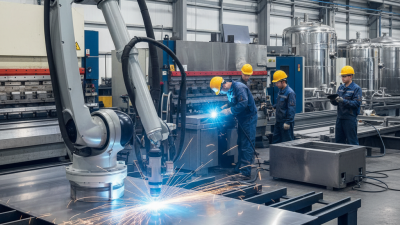
Stainless fabrication turns flat sheet, plate, tube, or bar into a useful component. The work may involve cutting, bending, forming, welding, grinding, polishing, and careful inspection. It appears simple from a distance. It is not.

Harold M. Cobb, author of The History of Stainless Steel, described stainless steel as “not one material, but a family of alloys.” That distinction matters. Each grade responds differently to heat, pressure, chemicals, and finishing methods. A fabricator may select 304 stainless steel for general equipment, while 316 can offer better resistance in chloride-rich environments. The right choice depends on service conditions, not appearance alone.

During fabrication, a laser can produce a precise edge, while a press brake creates controlled angles. Welding joins the parts, but excessive heat may cause distortion or visible heat tint. Grinding can remove marks, yet aggressive finishing may create scratches or thin the surface. Cleaning and passivation help restore corrosion resistance after welding and handling. Small details matter.

The process is not flawless. Even experienced teams can overlook contamination from carbon-steel tools or poor drainage in a finished design. That mistake may appear months later as staining. Reliable stainless fabrication therefore combines practical experience, qualified procedures, suitable filler metals, and dimensional checks. Inspectors may examine weld profiles, surface condition, alignment, and material certificates.

Good fabrication is more than making metal fit. It is making the finished part survive its real environment. That requires judgment. Sometimes, the cheapest method creates the most expensive correction.
What Is Stainless Fabrication and How Does It Work?

What Stainless Steel Fabrication Means and Why It Matters

Stainless steel fabrication means turning corrosion-resistant steel into a useful, accurate product. The work may include cutting, bending, drilling, welding, grinding, and finishing. Each step changes how the metal performs. A kitchen worktable, medical enclosure, or outdoor railing may begin as a flat sheet. Skilled fabricators read drawings, check measurements, and choose suitable tools for the material’s thickness. Details matter.

The process also protects stainless steel’s surface. Carbon-steel dust, rough handling, or excessive heat can leave contamination and discoloration. Fabricators therefore clean tools, control welding temperatures, and inspect seams after joining. They may use passivation or mechanical finishing when the application demands better corrosion resistance. A smooth surface is not only attractive. It is easier to clean and less likely to hold moisture, dirt, or bacteria.

Why does this matter? Poor fabrication can create sharp edges, weak joints, distorted panels, or hidden corrosion points. Accurate fabrication improves safety, service life, maintenance, and appearance. However, no process is flawless. A drawing may miss a real-world clearance, or a finished panel may reveal unexpected warping. Good teams measure again, document the issue, and adjust the method instead of hiding the mistake. That practical discipline builds reliability. It also reminds us that stainless steel is not maintenance-free. The right alloy, finish, cleaning routine, and fabrication quality must work together.

Key Materials, Tools, and Design Requirements

Stainless fabrication converts corrosion-resistant sheet, plate, tube, or bar into a precise working component. Material selection controls the entire process. Grade 304 suits many indoor and food-service applications. Grade 316L performs better where chlorides or saltwater create pitting risks. Duplex 2205 offers higher strength, but it demands stricter heat control. World Stainless reported approximately 60 million tonnes of crude stainless steel production globally in 2023, showing the material’s substantial industrial role.

Tools must match the alloy and the required finish. Fiber lasers cut clean profiles, while press brakes form controlled bends. TIG welding produces neat joints on thin sections. Orbital welding supports repeatable tube connections. Welders should use dedicated brushes and abrasives. Ordinary steel contamination can leave rust stains later. Pickling, passivation, and thorough rinsing restore the protective surface. Small mistakes matter.

Design requirements begin before metal reaches the workshop. Drawings should specify grade, thickness, bend radius, weld locations, tolerances, and surface finish. Provide drainage paths and avoid narrow pockets that trap cleaning chemicals. Allow tool access around every joint. A polished surface can hide poor internal geometry. The International Energy Agency estimates that iron and steel production creates about 2.6 gigatonnes of direct CO2 emissions annually. Efficient nesting and recyclable offcuts therefore matter, although material efficiency is often treated as an afterthought. No drawing is perfect. Review it with fabrication staff before release.

What Is Stainless Fabrication and How Does It Work? — Key Materials, Tools, and Design Requirements
Category Item or Process Typical Specifications or Characteristics Role in Stainless Fabrication Important Design or Quality Considerations
Key Material 304 Stainless Steel Austenitic stainless steel containing approximately 18% chromium and 8% nickel; commonly supplied in sheet, plate, tube, and bar forms. Used for general-purpose fabrication, food-processing equipment, architectural components, tanks, and enclosures. Provides good corrosion resistance and weldability, but may require additional protection in high-chloride or marine environments.
Key Material 316 Stainless Steel Austenitic grade containing chromium, nickel, and molybdenum; molybdenum improves resistance to pitting and crevice corrosion. Suitable for chemical-processing equipment, coastal installations, medical environments, and applications exposed to salts or chlorides. Usually selected when corrosion resistance is more important than minimizing material cost.
Key Material 430 Stainless Steel Ferritic stainless steel with chromium as the primary alloying element and little or no nickel. Used for indoor panels, appliances, decorative parts, and applications requiring magnetic material. Generally offers lower corrosion resistance and formability than 304 or 316 grades.
Material Form Sheet and Plate Flat stainless material supplied in different thicknesses; sheet is generally thinner than plate. Used for cabinets, covers, brackets, hoppers, ducting, tanks, and structural panels. Thickness, flatness, grain direction, and surface finish should be defined before cutting and forming.
Material Form Tube and Pipe Round, square, or rectangular hollow sections; sanitary tubing may have smooth internal surfaces. Used for frames, handrails, fluid-transfer systems, heat exchangers, and process equipment. Specify outside dimensions, wall thickness, tolerances, internal cleanliness, and the required surface finish.
Preparation Material Inspection Verification of grade, thickness, dimensions, surface condition, and traceability documentation. Confirms that the correct stainless material is available before production begins. Mixing carbon-steel tools, unknown grades, or contaminated stock can reduce corrosion resistance and compromise quality.
Cutting Tool Laser Cutting A focused laser beam produces precise cuts with narrow kerfs and limited mechanical contact. Creates profiles, holes, slots, and detailed patterns in sheet and plate. Heat-affected zones, edge condition, assist gas, thickness, and post-cut deburring requirements should be considered.
Cutting Tool Waterjet Cutting High-pressure water, often combined with abrasive media, cuts material without a substantial heat-affected zone. Suitable for thick plate, heat-sensitive designs, and complex profiles. Cutting speed, taper, surface texture, and the need for edge finishing should be included in the specification.
Forming Tool Press Brake Uses a punch and die to bend sheet or plate to a programmed angle and radius. Produces channels, angles, boxes, flanges, and other formed components. Stainless steel has springback; bend allowance, inside radius, grain direction, and minimum flange length must be evaluated.
Forming Tool Roll Forming or Rolling Progressively bends or curves material through rollers to create cylindrical or continuous shapes. Used for curved panels, cylinders, cones, rails, and repeated profiles. Control surface marking, weld seam orientation, thickness variation, and final dimensional accuracy.
Joining Process TIG Welding Uses a non-consumable tungsten electrode and an inert shielding gas; filler metal may be added separately. Produces clean, precise welds for thin material, visible joints, tubing, and sanitary assemblies. Requires control of heat input, shielding coverage, joint fit-up, purge gas, and interpass cleanliness.
Joining Process MIG or GMAW Welding Uses a continuously fed wire electrode and shielding gas for relatively fast welding. Efficient for longer seams, heavier sections, frames, and production fabrication. Wire selection, shielding gas, weld penetration, spatter control, and distortion management are essential.
Joining Process Mechanical Fastening Uses bolts, screws, rivets, clamps, or threaded inserts instead of a permanent welded joint. Allows assembly, disassembly, maintenance, and joining of heat-sensitive components. Prevent galvanic corrosion, avoid trapped moisture, and specify compatible fastener materials and isolation methods.
Surface Treatment Grinding and Deburring Removes sharp edges, weld irregularities, burrs, and surface defects using dedicated abrasives. Improves safety, fit, appearance, and readiness for subsequent finishing. Use abrasives reserved for stainless steel to avoid embedding iron particles that may later rust.
Surface Treatment Pickling and Passivation Chemical treatments remove heat tint or surface contamination and help restore the chromium-rich passive layer. Improves corrosion resistance after welding, grinding, or other fabrication operations. Follow appropriate chemical handling, rinsing, waste-control, and inspection procedures; treatment selection depends on the grade and condition.
Surface Finish Brushed or Satin Finish Directional finish created with controlled abrasive belts or pads; commonly specified by a finish designation. Provides a uniform appearance for architectural, commercial, and equipment surfaces. Maintain consistent grain direction and protect the surface from scratches during handling and installation.
Design Requirement Weld Joint Accessibility The joint must allow the welding torch, electrode, filler, and shielding gas to reach the required area. Supports complete fusion, consistent weld quality, and reliable inspection. Avoid inaccessible closed corners and define joint type, weld size, weld length, and inspection requirements on the drawing.
Design Requirement Drainage and Cleanability Surfaces should avoid unnecessary crevices, stagnant pockets, and inaccessible internal corners. Reduces moisture retention, contamination, bacterial growth, and localized corrosion. Use suitable slopes, radiused corners, continuous welds where required, and access for cleaning and inspection.
Design Requirement Thermal Distortion Control Welding and cutting can create localized heating, shrinkage, warping, and residual stress. Maintains dimensional accuracy and prevents assembly problems. Use balanced weld sequences, suitable fixturing, controlled heat input, intermittent welds where appropriate, and planned allowances.
Design Requirement Tolerances and Inspection Defines allowable variation for dimensions, angles, flatness, hole locations, welds, and surface condition. Ensures fabricated parts fit, function, and meet project requirements. Specify measurable acceptance criteria and inspection methods, such as visual inspection, dimensional checks, or non-destructive testing.
Process Flow Typical Fabrication Sequence Design review → material selection → cutting → forming → fit-up → welding or fastening → finishing → inspection. Provides a controlled path from the engineering drawing to the finished stainless component. Sequence operations to minimize rework, protect finished surfaces, and complete corrosion-control treatments after thermal operations.

How Stainless Steel Is Cut, Formed, and Joined

Stainless fabrication turns flat sheets, tubes, and bars into usable structures. The work usually follows three operations: cutting, forming, and joining. World Stainless reported about 58.4 million tonnes of crude stainless steel production in 2023. That volume reflects why controlled fabrication matters across food, medical, construction, and process equipment.

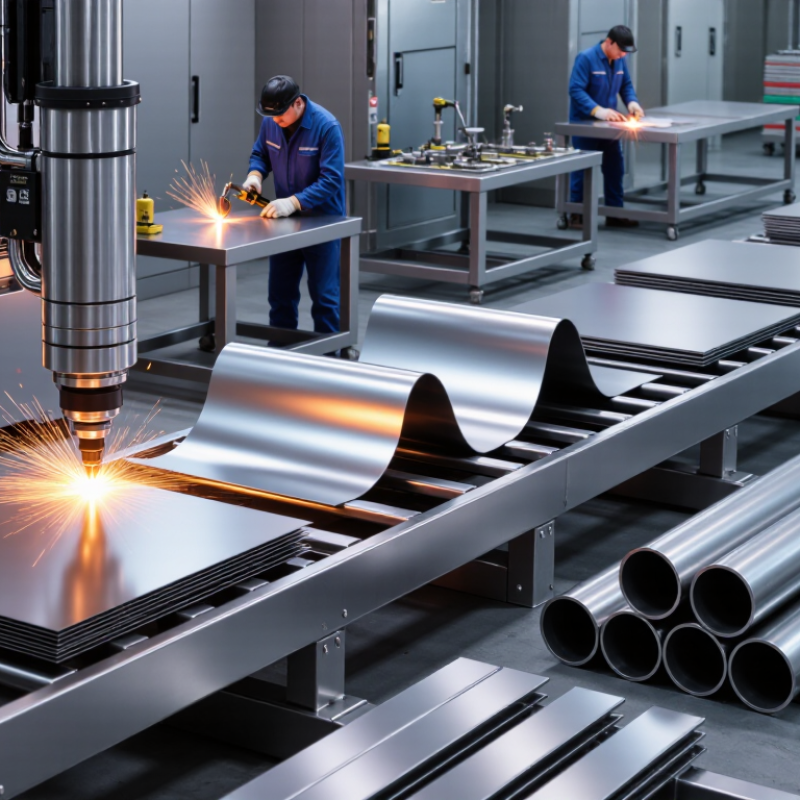
Cutting may use laser, plasma, waterjet, or abrasive saws. Laser cutting produces clean edges, but heat can discolor the surface. Forming uses press brakes, rollers, or tube benders. Stainless steel resists deformation, so operators must control force, bend radius, and springback. A small radius can create cracking. It can also leave stress that appears later.

Joining commonly relies on TIG, MIG, resistance welding, or mechanical fastening. Welding needs clean edges and controlled shielding gas. Poor protection can cause oxidation, called sugaring, inside a pipe. That rough surface may trap contaminants. The American Welding Society identifies heat control, joint preparation, and shielding as central factors in stainless welding quality. The sequence is simple. The details are not.

Tips: Keep stainless tools separate from carbon steel tools. Iron particles can create rust stains on a surface that is otherwise corrosion resistant. Measure twice before cutting. Even experienced teams occasionally miss springback or distort thin sheet. Inspect weld color, alignment, and internal cleanliness. Perfect results are not automatic; process records and honest rework decisions protect reliability.

Surface Finishing, Inspection, and Quality Control

What Is Stainless Fabrication and How Does It Work?

Stainless fabrication shapes, joins, and finishes steel components for demanding environments. Surface finishing begins after cutting, bending, and welding are complete. Technicians remove burrs, heat tint, weld spatter, and sharp edges. They may use grinding, brushing, polishing, or chemical passivation. Each method creates a different texture and corrosion resistance. A clean, even finish is not merely cosmetic. It supports sanitation, durability, and easier maintenance. Small marks matter.

Inspection should follow the drawing, material specification, and intended service conditions. Inspectors check dimensions with calibrated tools and examine welds under suitable lighting. They look for cracks, pits, discoloration, distortion, and uneven blending. Surface roughness may require measurement instead of visual judgment. Not every defect is obvious. A bright surface can hide shallow scratches or contamination. Practical experience helps, but documented criteria reduce personal bias.

Quality control connects finishing and inspection through traceable records. Material certificates, weld procedures, inspection results, and corrective actions should remain linked to each component. Cleaning tools must also be controlled because ordinary steel particles can contaminate stainless surfaces. This mistake is easy to make. It is also costly to overlook. In real workshops, inspection timing can slip when production pressure rises. That weakness deserves review, especially before final release. Rechecking repaired areas is essential, even when the repair appears flawless.

Common Applications and Fabrication Considerations

Stainless fabrication turns flat sheet, tube, or bar into useful components through cutting, bending, forming, welding, and finishing. In workshops, technicians may build food-processing tables, medical cabinets, handrails, exhaust systems, storage tanks, and architectural panels. Each application demands a different balance of strength, hygiene, appearance, and cost. A brushed finish can hide fingerprints, while a polished surface creates a cleaner visual effect. Fabricated stainless steel also performs well in humid areas because its chromium-rich surface helps resist corrosion.

The material is not completely maintenance-free. Chlorides, iron particles, poor weld cleaning, and trapped moisture can still cause staining or corrosion. Fabricators must select the grade according to exposure, temperature, and chemical contact. Weld heat can distort thin panels and alter the surface appearance. Careful fixturing and controlled heat reduce these problems. However, even experienced teams sometimes underestimate distortion around long seams. That mistake can become expensive after installation.

Tips: Confirm dimensions before cutting. Leave room for thermal movement. Keep stainless tools separate from carbon steel tools. Clean welds with suitable methods, then rinse and dry the surface. Avoid placing drainage holes where water can collect. A sample finish is useful before production begins. It reveals reflections, scratches, and awkward edge details that drawings may miss. Good fabrication depends on more than attractive metalwork. Small design decisions often determine service life.