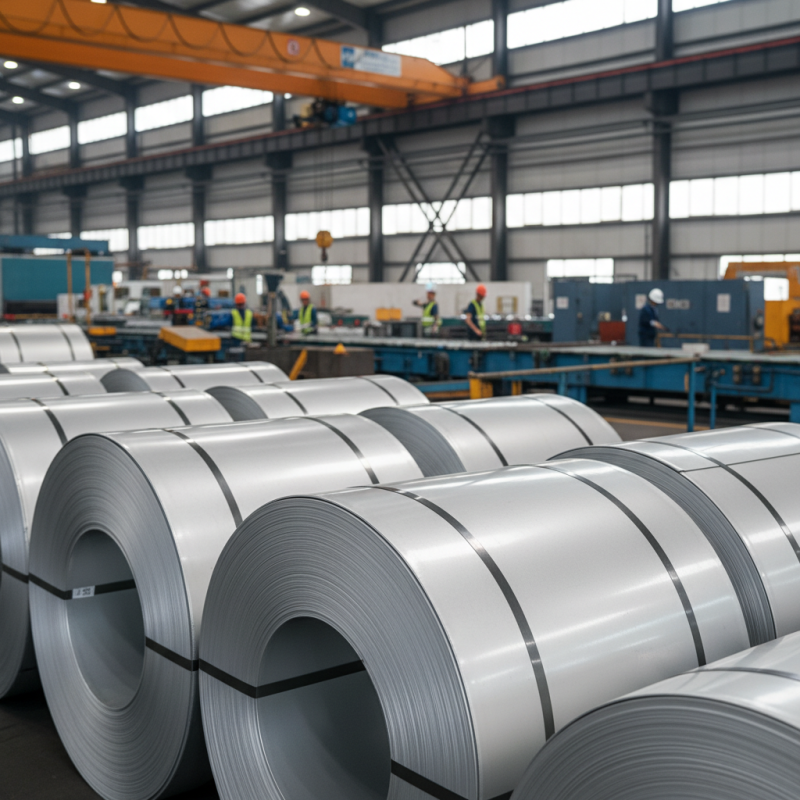
How to Select Cold Rolled Coil for Your Project?
Selecting the right Cold Rolled Coil for your project is vital. The material's unique properties can significantly impact your final product. Cold Rolled Coil offers excellent surface finish and dimensional accuracy. However, determining the best type for your needs can be challenging.
Consider the application. Are you producing automotive parts or appliances? Specific industries demand unique standards. It’s also essential to reflect on the thickness requirement. Too thick or too thin can lead to production issues. Cold Rolled Coil varies in gauge. Knowing your specifications is crucial to avoid pitfalls.
Quality is another crucial factor. Not all manufacturers produce coils with the same standards. A lower-quality coil may save money upfront but could cause long-term headaches. Take time to research and compare suppliers. Ask for samples or certifications. This part may seem tedious but can save you from future regrets.
Understanding Cold Rolled Coil and Its Applications
Cold rolled coil (CRC) is a versatile product in the steel industry. It undergoes a process that enhances its strength and surface finish. The thickness typically ranges from 0.1 mm to 6 mm. CRC is widely used in automotive, appliances, and construction applications. According to industry reports, global demand for cold rolled steel is projected to grow by 3.3% annually through 2025.
Understanding the specific applications of cold rolled coil can guide your selection. For instance, in the automotive sector, CRC offers improved surface quality, crucial for aesthetic and functional components. In contrast, the appliance industry benefits from CRC’s high strength-to-weight ratio for durable products. A report from market analysts highlights CRC’s adaptability, showing substantial rises in usage for consumer goods.
**Tip:** Always check the material specifications. A simple lapse can lead to project failures. Pay close attention to the exact gauge and yield strength; mistakes here may be costly.
Selecting the right cold rolled coil involves knowing its properties and applications. Sometimes, users overlook the need for specialized coatings for corrosion resistance. This is a common oversight. Ensure that you assess the environment where the final product will be used.
**Tip:** Consult with engineers or industry experts when in doubt. Their insights can help avoid costly errors, enhancing project success.
Key Factors to Consider When Selecting Cold Rolled Coil
When selecting cold rolled coil for your project, several key factors must be considered. The thickness of the coil plays a vital role in its applications. Common thicknesses range from 0.2 mm to 3 mm. Understanding your requirements will help you choose the right specification.
Tip: Always double-check the gauge when ordering. A slight mistake in thickness can affect your final product's performance.
The mechanical properties are critical as well. Yield strength, tensile strength, and hardness can vary between different grades of cold rolled steel. For instance, according to industry reports, some grades can have yield strengths between 250 MPa to over 700 MPa. Ensure that the material you choose meets your project's requirements.
Tip: Look for detailed technical data sheets from suppliers. This information is vital for ensuring you select the right material.
Surface finish is another essential consideration. The surface of cold rolled coils can affect paint adhesion and weldability. Industry standards specify several finishes, such as DS (Deep Drawing Steel) or SPCC (Standard Cold Rolled Steel). Mistakes in finish selection may lead to unexpected issues in later stages of production.
Taking the time to evaluate these factors ensures the best outcomes for your project.
How to Select Cold Rolled Coil for Your Project? - Key Factors to Consider
| Factor | Description | Recommended Standard |
| Thickness | The thickness of the coil affects strength, weight, and formability. | Choose between 0.3mm to 3mm based on application. |
| Width | Width should match processing equipment and end product requirements. | Common widths are 600mm, 900mm, and 1200mm. |
| Mechanical Properties | Includes tensile strength, yield strength, and elongation. | Refer to ASTM A1008 standards for guidance. |
| Surface Finish | Surface quality can impact appearance and functionality. | Options include smooth, matte, or textured finishes. |
| Coating | Coatings can enhance corrosion resistance and aesthetics. | Consider zinc or other polymer coatings. |
| Cost | Monitor market prices and budget constraints. | Benchmark pricing against current market standards. |
Evaluating Material Properties and Specifications
When selecting cold rolled coil for a project, evaluating material properties is crucial. Cold rolled steel offers precise dimensions and a smooth surface finish. It is often chosen for its ability to endure bending and forming. However, not all coils are the same. Thickness, yield strength, and hardness play vital roles. Understanding these specs can prevent issues down the line.
The mechanical properties of cold rolled coil dictate its suitability. Yield strength indicates how much stress the material can withstand before deformation. High strength is beneficial for structural applications but may lead to brittleness. Hardness measures resistance to wear. A balance is necessary; overly hard materials might crack under pressure.
It's also essential to consider the application. A coil intended for automotive parts may differ from one meant for household appliances. Environmental conditions matter too. Corrosion resistance can be vital in certain situations. Evaluate the requirements thoroughly before making a choice. Rushing this step could lead to complications later. Think carefully about each specification; it shapes the success of your project.
Assessing Cost and Availability of Cold Rolled Coil
When assessing the cost and availability of cold rolled coil, it is important to evaluate multiple factors. Pricing can fluctuate based on market conditions, so staying updated is vital. Demand often influences cost, especially during peak production seasons. It’s advisable to gather quotes from various suppliers to get a clearer picture.
Availability can also vary widely. Some sizes and grades may be easier to source than others. Anticipating your project’s needs is essential. Lead times can be longer for less common specifications. It's crucial to balance cost with the urgency of your requirements. If you’re on a tight timeline, cheaper options might not be wise.
Checking local suppliers can save on shipping costs. However, you must compare the quality of the coil. Sometimes, the cheapest option may compromise strength and durability. Understanding your project’s specifications and requirements is key. Investing time in research can prevent costly mistakes down the line.
Cost and Availability of Cold Rolled Coil
Best Practices for Sourcing and Purchasing Cold Rolled Coil
When sourcing cold rolled coil, understanding specifications is crucial. Thickness and width impact the project’s outcome. These dimensions influence the coil's strength and versatility, tailoring it to specific needs. Buyers often overlook the importance of surface finish. A high-quality finish can reduce processing time and improve aesthetics.
Finding a reliable supplier is another vital step. A good supplier should provide quality assurance documentation. Ensure they can meet your required standards consistently. Be wary of pricing that seems too good to be true. Sometimes, lower costs mean compromised quality. It’s essential to establish communication with the supplier. Ask questions about their manufacturing process and practices. A transparent supplier will help avoid issues down the line.
Finally, consider logistics and delivery times. Delays can halt projects and impact budgets. Always clarify lead times before making a purchase. It’s easy to make assumptions, but this can lead to errors. Regular follow-ups can help keep production on track. Always be prepared for unexpected challenges. Flexibility is key to managing your sourcing effectively.