Why Online Fabrication is Revolutionizing Manufacturing and Design?
Online fabrication is changing the way we think about manufacturing and design. This innovative approach allows individuals and businesses to create products from anywhere in the world. By using digital tools, the process becomes more accessible and efficient. Designers can quickly turn ideas into prototypes through online platforms.
The speed of online fabrication is remarkable. Customization options are limitless. However, it also raises questions about quality control and intellectual property. New technologies can sometimes produce unexpected results. The ease of sharing designs can lead to unintended consequences. Collaborating online may lead to oversights that a traditional setup might catch.
As we embrace online fabrication, we must reflect on its implications. While it democratizes design, the need for skilled evaluation remains crucial. Balancing innovation with responsibility is vital. The future of manufacturing is bright, but challenges exist. Being aware of these factors can help guide this transformation.
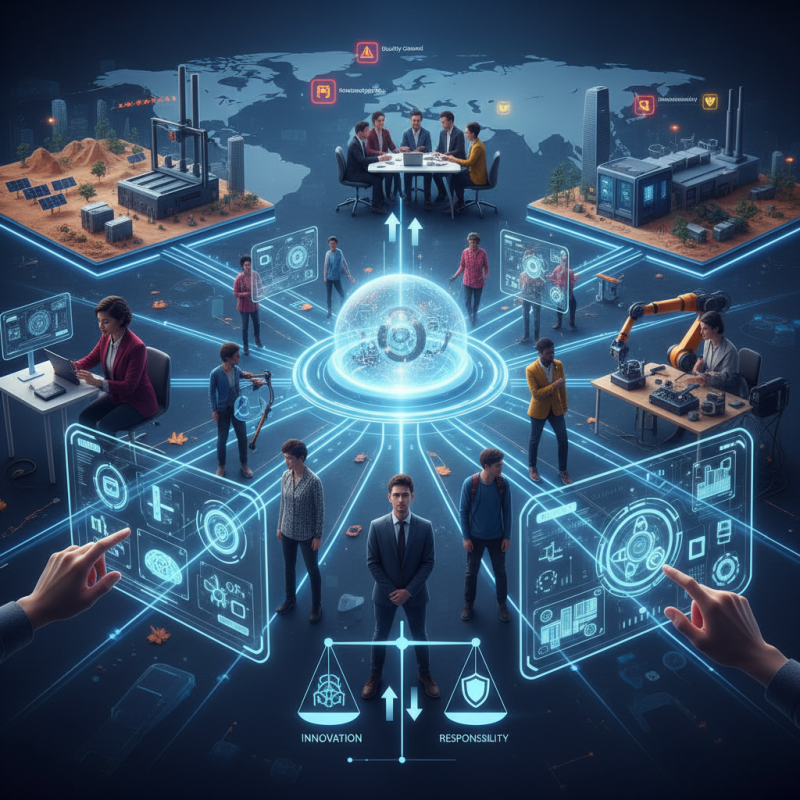
The Concept of Online Fabrication in Modern Manufacturing
Online fabrication is changing the landscape of modern manufacturing. It allows anyone to design and create products from anywhere. This method uses digital tools to transform ideas into tangible objects. Users can submit their designs online. Factories then produce these items using various techniques. This process bridges the gap between concept and production.
The democratization of fabrication empowers creators. It reduces the need for significant capital investment. However, the technology is not without flaws. Quality control can be inconsistent. Designs may not always translate well into physical objects. Users must continually refine their ideas. Feedback is essential for improvement. This cycle fosters collaboration and innovation among designers and makers alike.
Online fabrication is accessible. Local communities can benefit from shared resources. Yet, it raises questions about sustainability. Large-scale production can lead to waste. Ensuring efficient use of materials is a challenge. As we embrace this new method, we must consider its implications for the environment and economy. Thoughtful design and responsible practices are crucial for progress.
Online Fabrication Impact on Manufacturing and Design
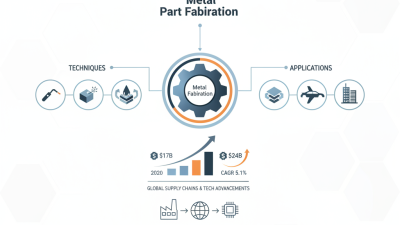
The chart above compares the production speed between traditional manufacturing methods and online fabrication techniques. As illustrated, online fabrication significantly increases production speed, highlighting its revolutionary impact on the manufacturing and design processes.
Key Technologies Driving Online Fabrication Innovations
Online fabrication is rapidly transforming how products are designed and manufactured. At the heart of this revolution are several key technologies that empower creators. 3D printing, for instance, has become a game changer. It allows for rapid prototyping and custom designs. However, the quality can vary. Not every 3D printer delivers consistent results. This inconsistency can lead to unexpected challenges.
Another technology driving this shift is digital fabrication software. These tools enable designers to visualize their ideas before actual production. Yet, the complexity of some software can be daunting for newcomers. Many users face a steep learning curve, which can hinder creativity. Understanding how to use these tools effectively requires time and patience.
Laser cutting is also crucial in online fabrication. It offers precision that traditional methods often lack. This technology makes intricate designs feasible, but it still has its drawbacks. Material selection remains a critical factor. Not all materials are suitable for laser cutting, and the results can differ significantly based on the chosen substrate. This inconsistency pushes designers to continually refine their approaches. The journey of embracing these technologies is as much about learning from failures as it is about celebrating successes.
Why Online Fabrication is Revolutionizing Manufacturing and Design? - Key Technologies Driving Online Fabrication Innovations
| Technology |
Description |
Impact on Manufacturing |
Benefits |
| 3D Printing |
A process of creating three-dimensional objects from a digital file. |
Enables rapid prototyping and customization of products. |
Reduced material waste, lower costs, and faster production times. |
| CNC Machining |
Computer Numerical Control machining for precision cutting and shaping. |
Allows for high precision and repeatability in manufacturing. |
Enhances production efficiency and ensures high-quality outputs. |
| Laser Cutting |
Utilizes a laser to cut materials with high precision. |
Facilitates complex designs and shapes that were previously difficult to achieve. |
Provides clean edges and reduces finishing time. |
| Online Design Tools |
Web-based platforms for designing and collaborating on projects. |
Streamlines the design process and allows for instant feedback. |
Improves collaboration and speeds up time-to-market. |
| IoT Integration |
Internet of Things connectivity for real-time monitoring of manufacturing processes. |
Increases overall equipment effectiveness and reduces downtime. |
Enables predictive maintenance and enhances operational efficiency. |
Impact of Online Fabrication on Design Processes and Creativity
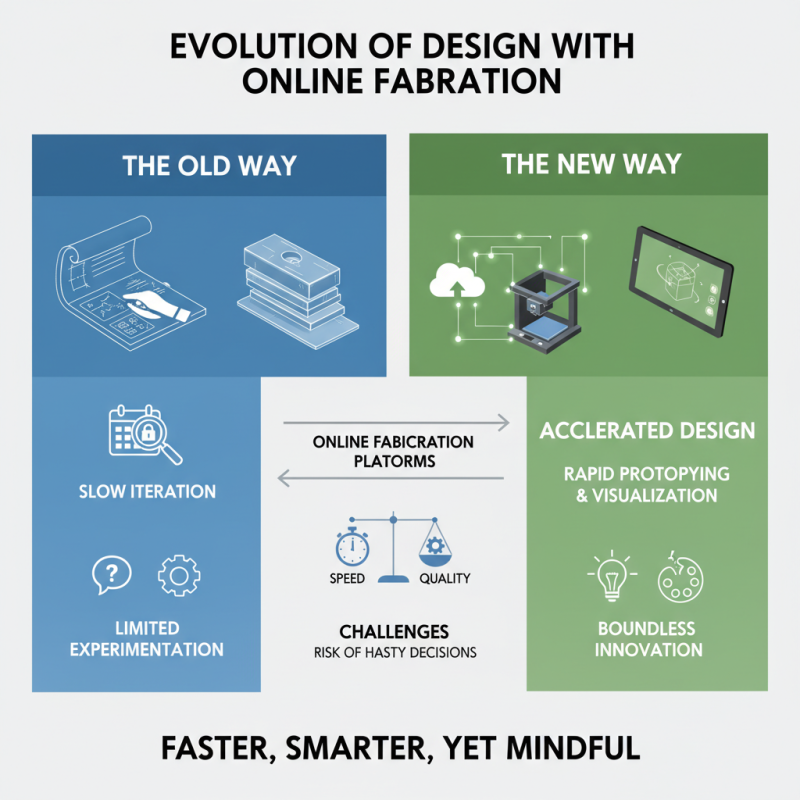
Online fabrication is changing how designers think and work. The ability to create prototypes online allows designers to experiment with materials and forms quickly. This accelerates the design process and opens doors to new ideas. Designers can now visualize their concepts in real-time. But this has its challenges. Rapid iteration can lead to hasty decisions, sometimes sacrificing quality for speed.
Creativity flourishes in this environment, but it can also feel overwhelming. With so many options, choosing a direction can be difficult. Designers need to balance exploration with refinement. Taking time to reflect on concepts is crucial. Have a clear vision but be open to unexpected outcomes.
Tips: Embrace failure. It's a part of creativity. Learn from mistakes to enhance your designs. Also, set limits on iterations. This helps maintain focus and prevents aimlessness. Lastly, collaborate with others. Sharing ideas can spark new perspectives that enrich your design process.
Advantages and Challenges of Adopting Online Fabrication
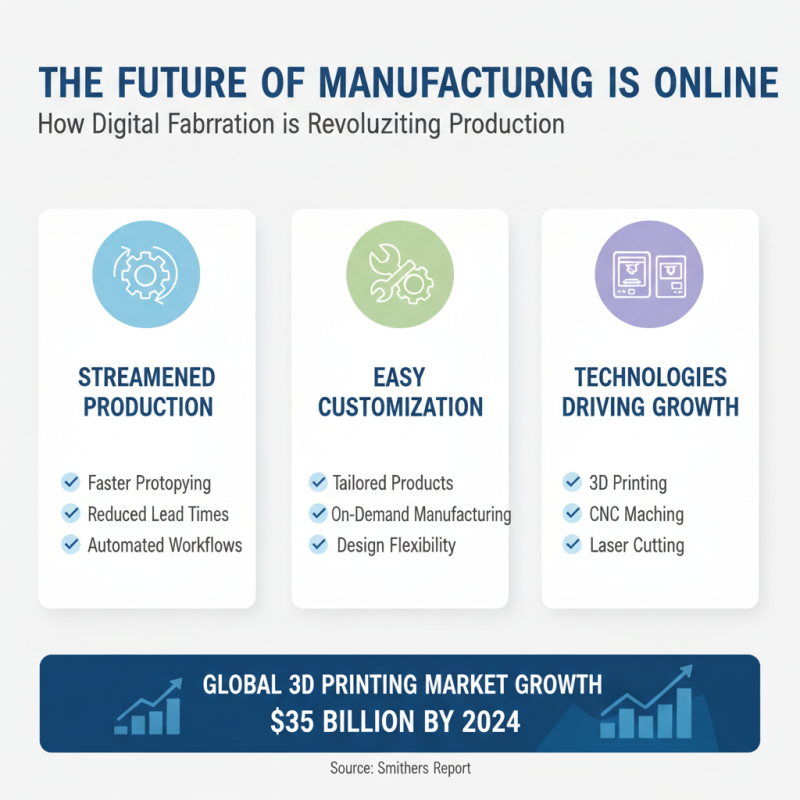
Online fabrication offers numerous advantages to manufacturers and designers. It streamlines the production process. Customization becomes easier. With 3D printing and CNC machining, companies can create tailored products quickly. A report from Smithers states that the global 3D printing market is projected to grow to $35 billion by 2024. This growth indicates a strong shift toward on-demand production models.
However, challenges persist. Quality control remains a significant concern. Inconsistent material properties can lead to subpar outcomes. A study by the International Journal of Advanced Manufacturing Technology highlights that 25% of 3D printed parts fail during initial testing. This raises doubts about reliability. Additionally, the cost of large-scale production can be high. Many manufacturers struggle with the transition.
Moreover, skills gaps exist in the workforce. Many lack adequate training in new technologies. Addressing these gaps will be crucial for future success. Companies must invest in education. This investment can help bridge the knowledge divide. Embracing online fabrication requires careful consideration of these issues. The benefits are clear, but the pitfalls cannot be ignored.
Future Trends and Potential of Online Fabrication in Industry
Online fabrication is changing the landscape of manufacturing. Trends indicate a shift towards decentralized production. Reports highlight that 60% of manufacturers are adopting digital fabrication techniques. This allows for customization at scale, something traditional manufacturing struggles to achieve.
One key trend is the rise of on-demand production. This reduces waste and lowers inventory costs. In fact, a recent study pointed out that businesses could cut lead times by 50% using online fabrication methods. However, challenges remain. Quality control can be inconsistent, and not all materials are suitable for digital processes.
Another potential is in the realm of sustainability. Online fabrication promotes local sourcing of materials, reducing transportation emissions. Yet, critics argue that energy consumption in digital production can be high. The industry must navigate these trade-offs. Innovation will drive further improvements in efficiency and sustainability, but it requires ongoing reflection and adjustment.