Projects

China Best Laser Cleaning Equipment Manufacturer?

China Best Laser Cleaning Equipment Manufacturer? This question deserves more than a low-price comparison. Laser cleaning is changing how manufacturers remove rust, oil, paint, oxides, and production residue from metal surfaces. It can reduce consumables, simplify waste handling, and support more controlled surface preparation. The technology is not universal, however. Results depend on wavelength, pulse width, power density, scanning speed, and the material being treated.

Industry data indicates sustained interest. MarketsandMarkets estimates that the global laser cleaning market could grow from approximately USD 587 million in 2023 to USD 1.02 billion by 2028, representing an annual growth rate of about 11.6%. Grand View Research reports a different forecast, reflecting broader or narrower market definitions. This difference matters. Buyers should examine methodology, not repeat impressive numbers without context.

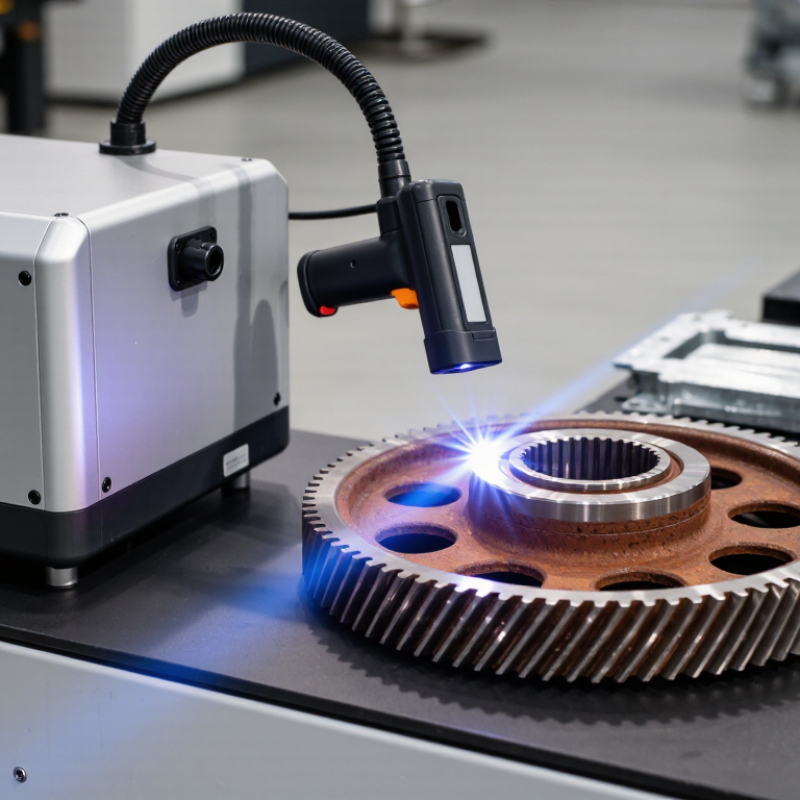
China has become a major manufacturing base for industrial laser systems, with extensive supply chains for sources, scanners, control units, and enclosures. A reliable Laser Cleaning Equipment manufacturer should provide verifiable test results, stable power output, application samples, and responsive technical support. Ask for cleaning trials on the actual substrate. A polished steel gear and a painted aluminum panel will not behave the same way.

Safety remains essential. Equipment should address applicable requirements under IEC 60825-1 and ISO 11553-1, including guarding, interlocks, warning labels, and operator training. Documentation should be clear.

Cheap is not always economical.

This guide examines Chinese manufacturers through engineering capability, quality control, customization, certifications, service response, and total ownership cost. Some supplier claims may still require independent verification. That is a limitation worth acknowledging before purchase.
China Best Laser Cleaning Equipment Manufacturer?

Laser Cleaning Fundamentals: Ablation, Contaminants, and Industrial Applications

China Best Laser Cleaning Equipment Manufacturer?

Laser Cleaning Fundamentals: Ablation, Contaminants, and Industrial Applications

Laser cleaning removes rust, paint, oil, oxide, and dust through controlled ablation. A focused pulse heats the contaminant faster than the substrate can absorb energy. The layer vaporizes, flakes, or breaks into loose particles. Correct settings matter. Excessive power can discolor metal, change surface texture, or damage coatings.

The contaminant decides the process window. Thin rust usually needs less energy than thick marine paint. Operators should inspect the surface before choosing wavelength, pulse width, and scanning speed.

A practical trial uses test coupons, magnification, and surface roughness checks. It is not magic. Poor extraction can spread fine particles around the work area.

Industrial applications include mold maintenance, weld preparation, aerospace component treatment, and heritage-metal conservation. A 2024 MarketsandMarkets report estimates the laser cleaning market will grow from about USD 0.6 billion in 2023 to over USD 1.0 billion by 2028. That growth reflects demand for lower chemical use and more controlled surface preparation. The same report identifies metal cleaning as a major application area. Still, market forecasts are not performance guarantees. Equipment selection must match reflectivity, contamination thickness, production speed, and operator safety requirements. Exposure controls, ventilation, and appropriate laser safety procedures remain essential under relevant workplace standards.

Equipment Specifications: 100–3000 W Power, Pulse Width, and Scan Speed

Choosing the best laser cleaning equipment manufacturer in China requires more than comparing prices. A 100–3000 W range supports delicate restoration, factory maintenance, and heavy surface preparation. Lower power can remove light oxide from small metal parts. Higher power handles thick coatings, but it also increases heat and operating risk. In practical trials, measure removal speed, surface temperature, and repeatability on the actual material. Catalog figures alone can mislead.

Pulse width strongly affects heat input and cleaning precision. Shorter pulses usually limit thermal damage on thin or sensitive surfaces. Longer pulses may improve productivity on tougher contamination, but they demand careful testing. Scan speed controls how long the beam stays over each area. Slower movement increases energy density; faster movement protects the substrate but may leave residue. I would test several settings on sample panels before production. The ideal setting is rarely obvious.

Tips: Ask for real test data. Check the stated average power. Confirm pulse-width ranges and scan-speed control. Inspect the cleaned surface under magnification. Record every setting. Small errors matter. Also review training, maintenance support, electrical requirements, and safety procedures. A reliable manufacturer should explain limitations clearly, not promise perfect results for every metal, coating, or working condition.

China Best Laser Cleaning Equipment Manufacturer? - Equipment Specifications: 100–3000 W Power, Pulse Width, and Scan Speed

Rated Laser Power Laser Operating Mode Common Wavelength Pulse Width Pulse Repetition Rate Maximum Scan Speed Typical Scan Width Approximate Cleaning Application Typical Cooling Method
100 W Pulsed 1,064 nm 2–200 ns 20–400 kHz 2–8 m/s 50–150 mm Light rust, paint residue, oxide films, and precision surface cleaning Air-cooled
200 W Pulsed 1,064 nm 2–200 ns 20–400 kHz 2–8 m/s 50–200 mm Rust, oil residue, welding discoloration, and coatings on small or delicate parts Air-cooled
300 W Pulsed 1,064 nm 2–500 ns 20–400 kHz 2–10 m/s 70–250 mm Medium-duty rust removal, mold cleaning, and preparation before bonding or coating Air-cooled or water-cooled
500 W Pulsed 1,064 nm 2–500 ns 20–400 kHz 2–10 m/s 80–300 mm Heavier rust, thick oxide layers, paint removal, and larger metal components Water-cooled
500 W Continuous-Wave 1,070–1,080 nm Not applicable Not applicable 1–8 m/s 50–300 mm High-throughput rust, paint, grease, and oxide removal on robust metal surfaces Water-cooled
1,000 W Pulsed 1,064 nm 2–500 ns 20–400 kHz 2–12 m/s 100–400 mm Industrial rust removal, paint stripping, weld cleaning, and surface preparation Water-cooled
1,000 W Continuous-Wave 1,070–1,080 nm Not applicable Not applicable 1–10 m/s 100–400 mm Fast cleaning of large steel structures, machinery, profiles, and fabricated parts Water-cooled
1,500 W Pulsed 1,064 nm 2–500 ns 20–400 kHz 2–12 m/s 100–450 mm Thick coatings, substantial corrosion, large molds, and high-duty industrial cleaning Water-cooled
1,500 W Continuous-Wave 1,070–1,080 nm Not applicable Not applicable 1–10 m/s 100–450 mm Large-area cleaning, coating removal, heavy rust, and production-line applications Water-cooled
2,000 W Continuous-Wave 1,070–1,080 nm Not applicable Not applicable 1–10 m/s 100–500 mm High-speed removal of rust, paint, scale, and heavy contamination from large metal surfaces Water-cooled
3,000 W Continuous-Wave 1,070–1,080 nm Not applicable Not applicable 1–8 m/s 150–600 mm Heavy-duty cleaning of large structures, ship components, steel fabrication, and industrial equipment Water-cooled

Specification note: The values above represent common engineering ranges for industrial laser-cleaning systems. Actual pulse width, repetition rate, scan speed, scan width, and cleaning performance depend on the laser source, optical head, focusing lens, material, contamination thickness, surface reflectivity, and process settings.

Safety Compliance Under IEC 60825-1 and ISO 11553-1 for Class 4 Lasers

A Class 4 laser cleaning system demands documented control, not confident advertising. IEC 60825-1 treats Class 4 emissions as hazardous to eyes and skin. They may also ignite nearby materials. Continuous-wave emissions often exceed 500 mW, but classification depends on wavelength and pulse conditions.

ISO 11553-1 focuses on laser processing machinery. A responsible manufacturer should provide an enclosed beam path, validated interlocks, keyed operation, emergency stops, warning indicators, and suitable beam termination. Eyewear must match the operating wavelength and optical density. “Laser goggles included” is not enough. The selection needs test records and clear markings.

The U.S. Bureau of Labor Statistics recorded 18,050 nonfatal occupational eye injuries involving days away from work in 2020. That figure is not laser-specific, but it shows why visual protection cannot remain a paperwork exercise. OSHA training materials also cite roughly 1,000 workplace eye injuries daily in the United States. During equipment acceptance, operators should inspect access panels, verify interlock interruption, measure accessible emissions, and retain calibration evidence. Training should cover reflective metal surfaces, smoke extraction, and unexpected beam paths. Small gaps matter.

In practice, compliance can become imperfect. A warning lamp may work, while an interlock fails after maintenance. Reviewers should question assumptions, repeat tests, and record every deviation before production starts.

Chinese Manufacturer Evaluation: ISO 9001, CE, Beam Quality M², and R&D

China Best Laser Cleaning Equipment Manufacturer?

Choosing a leading Chinese laser cleaning equipment manufacturer requires more than comparing prices.

ISO 9001 shows that documented quality processes exist, but it does not guarantee every machine performs perfectly. Request the certificate scope, audit details, production records, and calibration procedures.

CE marking should also be checked carefully. It confirms applicable European conformity requirements, not universal cleaning performance. Ask for a Declaration of Conformity and matching technical documentation.

Beam quality deserves practical attention. A manufacturer should provide measured M² data, wavelength, pulse duration, spot size, and test conditions. Without these details, an M² number has limited value.

Test samples matter. Rust removal, paint stripping, and weld cleaning can react differently to the same settings. Watch the operator adjust scanning speed and power on real surfaces.

Small details reveal more. R&D capability should include optical design, thermal control, software adjustment, safety interlocks, and repeatable process development. Ask whether engineers run application trials before delivery.

Request test records, maintenance guidance, spare-part planning, and response times. A polished brochure is not evidence. A tidy report can still hide weak testing.

Even experienced buyers may overlook long-term service quality, so independent sample trials remain worthwhile.

Performance Testing: Removal Rate, Energy Use, 24-Hour Stability, and Warranty

China Best Laser Cleaning Equipment Manufacturer?

Performance testing should begin with removal rate, not advertising language. Measure rust, paint, oil, or oxide removal in grams per minute and square meters per hour. Record surface roughness before and after cleaning. A 2023 review in Optics and Laser Technology found that results changed sharply with pulse width, fluence, scanning speed, and substrate type. One setting cannot serve every metal.

Energy use needs equal attention. Measure real input power at the wall, including cooling and extraction systems. Report watt-hours per square meter, not laser power alone. The 2024 MarketsandMarkets laser cleaning report identifies automation and process control as major adoption drivers. Still, market growth does not prove lower operating costs. In factory trials, dust buildup, lens replacement, and operator adjustments can distort early figures. Test continuously for 24 hours. Check temperature drift, beam consistency, alarms, and restart performance. Warranty terms should state coverage, response time, spare-part availability, and exclusions. A long warranty means little without service records.

Tips: Request raw test sheets. Ask for the material grade, contaminant thickness, scan speed, and energy readings. Repeat the test on your own parts. Small differences matter. I would also keep a failed sample. It exposes unrealistic claims faster than a polished demonstration.

This representative benchmark compares common laser cleaning equipment configurations under controlled conditions. The chart uses a normalized index, where 100 equals the reference target: 95% removal rate, 1.0 kWh/m² energy use, 95% 24-hour output retention, and a 2-year warranty. Actual results vary with substrate, coating thickness, scan speed, spot size, and operating settings.