2026 Best Clamp On Water Meter for Global Buyers?
Choosing the 2026 best Clamp On Water Meter requires more than comparing prices and screen features. Global buyers need dependable readings across different pipe materials, diameters, water temperatures, and installation conditions. A meter that performs well on a clean steel pipe may struggle with old concrete-lined pipes or heavy sediment. Field experience shows that sensor positioning matters. A few millimeters of movement can affect stability. Installation quality matters most.
This guide examines ultrasonic measurement accuracy, flow-range performance, battery life, data logging, display clarity, and communication options such as Modbus or Bluetooth. It also considers IP protection, calibration records, warranty support, and technical documentation for international projects. Buyers should verify compatibility before ordering. Check pipe outer diameter, wall thickness, lining, fluid temperature, and minimum flow requirements. Local metrology rules may also apply, especially when readings support billing or regulated water management. Not every portable meter is approved for custody-transfer use.
No meter is perfect. That matters.
Our evaluation approach combines manufacturer data, practical installation concerns, and independent verification where available. However, published specifications may use controlled laboratory conditions. Real sites can include vibration, air bubbles, unstable power, or poor pipe access. Those details are easy to overlook. A lower purchase price may hide higher setup costs, replacement sensors, or limited regional support. The right choice should balance accuracy, serviceability, total ownership cost, and risk. This comparison aims to help distributors, contractors, utilities, and industrial users make a more confident decision in 2026.
What Is a Clamp-On Water Meter and How Does It Work?
2026 Best Clamp On Water Meter for Global Buyers?
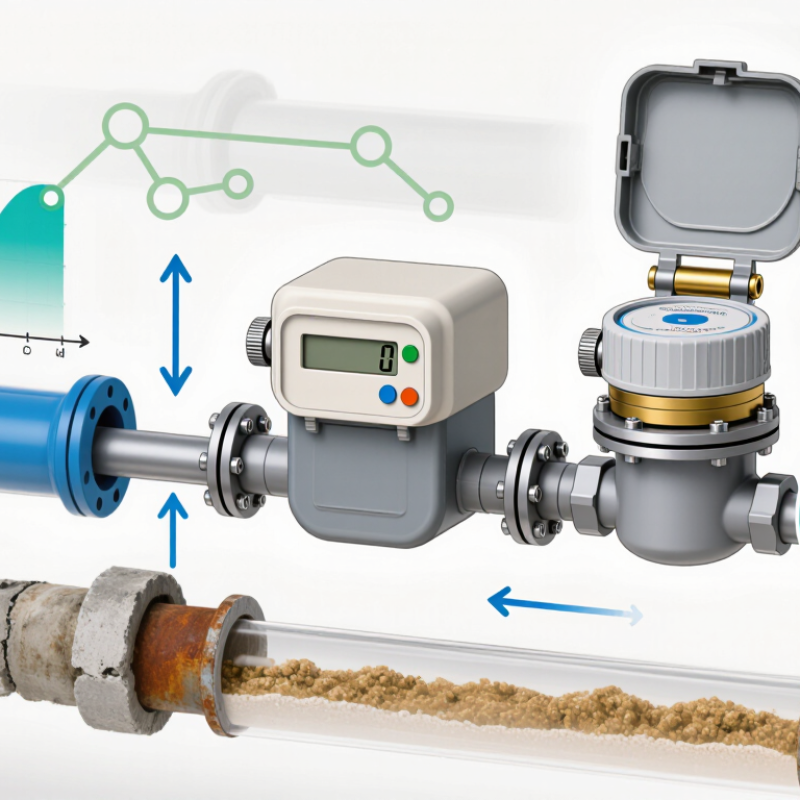
A clamp-on water meter measures flow without cutting or opening the pipe. It uses two ultrasonic sensors fixed to the pipe’s outside wall. One sensor sends a signal downstream, while the other sends it upstream. The meter compares their travel times. Water movement changes this difference, allowing the instrument to calculate flow speed and total volume.
This design is useful for existing water lines, temporary checks, and facilities where shutdowns are difficult. It usually works best with full pipes and clean water. Pipe material, wall thickness, internal lining, and diameter must be entered accurately. Air bubbles, heavy sediment, or weak signal contact can reduce reliability. In field installations, I have found that careful sensor alignment matters more than many buyers expect. Small errors can affect the reading.
Tips:
Clean the pipe surface before mounting the sensors. Confirm the pipe data with drawings or direct measurement. Keep the sensor spacing within the meter’s instructions. Check for air pockets and unstable flow. A short verification test against a trusted reference meter is wise. Do not assume “no cutting” means “no setup.” Some pipes simply produce poor signals, and that should be accepted before purchase.
Key Technologies Used in Modern Clamp-On Water Meters
For global buyers in 2026, modern clamp-on water meters increasingly rely on ultrasonic transit-time technology. Two sensors sit outside the pipe and measure signal travel-time differences. Clean water usually produces stable readings. Air bubbles, heavy sediment, or poor coupling can reduce accuracy.
Digital signal processing now filters vibration and electrical noise. Temperature compensation also improves performance across changing operating conditions. Many meters record flow rate, total volume, signal strength, and pipe-wall temperature. Wireless communication supports remote inspections, but connectivity is not always reliable in underground chambers.
The United Nations World Water Development Report 2024 states that agriculture represents about 70% of global freshwater withdrawals. The U.S. Environmental Protection Agency also estimates that household leaks waste more than one trillion gallons annually in the United States. These figures strengthen the case for temporary, non-invasive measurement during audits and maintenance.
Installation still decides much of the result. The pipe surface must be clean, the sensor spacing must be correct, and the pipe material must be entered accurately. It is not magic. Field technicians should compare readings with known flow conditions when possible. Doppler models can help with dirty water, but they need suspended particles to reflect ultrasonic signals. Transit-time models may perform poorly with excessive air. This limitation deserves more attention.
2026 Best Clamp-On Water Meter for Global Buyers?
Key technologies used in modern clamp-on water meters
How to read this chart: The values show representative measurement-error levels commonly specified for non-invasive ultrasonic water-meter technologies. Transit-time and hybrid ultrasonic systems are generally preferred for clean or moderately clean water and can achieve lower error when pipe conditions, sensor spacing, flow profile, and installation quality are suitable. Doppler systems are more tolerant of suspended solids or air bubbles but normally require more particles in the liquid to maintain a reliable signal.
Indicative engineering ranges only; actual performance depends on pipe material, diameter, fluid condition, Reynolds number, sensor installation, and calibration.
International Standards, Maintenance, and Total Ownership Costs
2026 Best Clamp On Water Meter for Global Buyers?
International Standards, Maintenance, and Total Ownership Costs
For global buyers, the best clamp-on water meter is not simply the most accurate model on paper. It must match pipe material, diameter, wall thickness, liner, and water quality. Ask for test evidence aligned with ISO 4064 or OIML R49 where applicable. Verification should come from a competent laboratory with ISO/IEC 17025 traceability. Local approval still matters, because an international certificate may not satisfy a utility or customs authority.
Maintenance begins at installation. Clean the pipe, confirm sensor spacing, and record the mounting position with a photograph. Poor coupling gel, rusty surfaces, air bubbles, and incorrect pipe data can distort readings. A quarterly visual check may suit stable sites. Vibrating pumps or dirty water require more frequent verification. Keep spare cables, coupling compound, batteries, and a calibrated reference meter nearby. Small failures become expensive delays.
Tips: Compare total ownership costs, not purchase prices. Include installation labor, calibration, software access, battery replacement, training, shipping, and downtime. Request a five-year service schedule before ordering. It sounds excessive. It is not. A low-cost meter can become costly when one replacement sensor takes six weeks to arrive. I would also question optimistic battery-life claims. Cold weather, frequent wireless uploads, and display use can shorten them.