
Projects

2026 Best Carbon Film Resistor Types for Global Buyers

Choosing the right resistor can feel simple until temperature, tolerance, supply reliability, and application demands enter the picture. For global buyers, a carbon film resistor is not merely a low-cost component. It can influence signal stability, assembly yield, and long-term product confidence.

This guide examines the 2026 Carbon Film Reaistor market from a practical purchasing perspective. It compares common resistor types, resistance ranges, tolerance grades, temperature coefficients, power ratings, and coating quality. A 1/4-watt resistor may suit a small control board, while a 1-watt version may better handle continuous heat near a power section. These details matter.

Real purchasing decisions also depend on manufacturer records, batch consistency, test documentation, and packaging. Buyers should review datasheets, verify certification claims, and request samples before approving large orders. Distributor stock can look attractive, but old inventory or unclear traceability may create avoidable risks. Check the markings carefully.

No selection guide is perfect. Carbon film parts can perform reliably, yet they may not be ideal for precision measurement, harsh humidity, or demanding high-frequency circuits. Experienced engineers still revisit assumptions after testing. A resistor that passes a bench check may behave differently after thermal cycling or prolonged operation. That judgment matters.

The following overview is designed for engineers, importers, OEM purchasers, and distributors comparing suppliers across regions. It combines technical evaluation with practical sourcing experience, while recognizing that price alone rarely defines value. A dependable choice balances performance, documentation, availability, and responsible quality control.
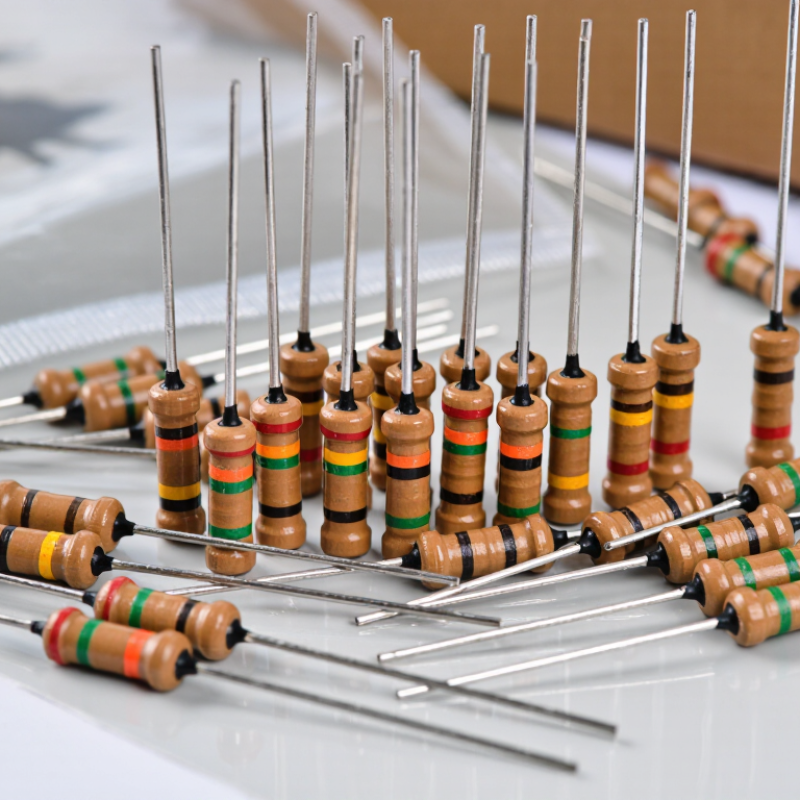
2026 Best Carbon Film Resistor Types for Global Buyers

Carbon Film Resistor Basics and Operating Principles

Carbon film resistors are passive components that limit current and establish stable voltage levels in electronic circuits. Their resistive element is a thin carbon layer deposited on a ceramic rod. A protective coating helps shield the film from moisture, dust, and mechanical damage. Metal caps and leads provide electrical connections at both ends.

Their operating principle is simple. Current passes through the carbon film and encounters resistance, producing a controlled voltage drop. Electrical energy becomes heat, so power rating matters during continuous operation. Resistance depends on the film’s length, thickness, and trimming pattern. Carbon film types usually offer moderate accuracy, practical temperature performance, and low cost. However, they may generate more noise than precision film technologies. Real circuits often reveal this difference.

Tips: Check resistance tolerance, power rating, voltage rating, and temperature coefficient together. Leave a safety margin instead of selecting the exact calculated wattage. A resistor rated for 0.25 watts may run too hot near that limit. Measure samples after assembly, especially when equipment operates outdoors or in warm enclosures. Lead spacing also matters during board placement. I have found that overlooked heat near transformers can shorten resistor life. Datasheets are useful, but actual operating conditions deserve another review.

Key Types of Carbon Film Resistors for Different Applications

2026 Best Carbon Film Resistor Types for Global Buyers

Carbon film resistors remain practical for cost-sensitive circuits, signal paths, and general control boards. Their resistive film is cut into a spiral, then protected by an insulating coating. Standard axial types usually offer ±5% tolerance and moderate temperature stability. They suit power indicators, basic voltage dividers, and low-frequency control circuits. The trade-off is easy to miss. Their noise and drift can exceed metal-film alternatives.

For tighter measurements, choose precision carbon film types with ±1% or ±2% tolerance. Their lower resistance variation supports sensor interfaces and calibration networks. High-voltage versions use longer bodies and stronger insulation. They are useful in test equipment and power-control assemblies.

Flame-retardant coatings add safety value in enclosed products, but buyers should verify certification documents for each market. IEC 60115-2 provides a useful framework for fixed resistor testing, marking, and performance verification.

MarketsandMarkets’ 2024 Resistor Market report estimates the global resistor market at about USD 5.7 billion in 2023. It projects approximately USD 7.4 billion by 2028, with a 5.4% compound annual growth rate. This growth does not mean every carbon film type is equally suitable.

Check tolerance, temperature coefficient, rated voltage, pulse behavior, and derating curves. One blind spot remains. Many purchasing teams compare unit prices while overlooking humidity exposure and long-term drift. Real samples should be tested under the expected temperature and load.

Electrical Ratings, Tolerances, and Temperature Performance

Carbon film resistors remain practical choices for general circuits, control panels, and low-cost repair work. Global buyers should compare voltage, power, tolerance, and temperature behavior before comparing prices. A 0.25-watt resistor may look suitable, yet continuous operation near its limit can shorten service life. I usually select at least 30% power margin for warm enclosures. Small detail. It matters.

Tolerance affects circuit accuracy. A 5% resistor may suit indicator circuits, relays, and basic voltage dividers. Precision sensing networks usually need 1% or tighter tolerance. Carbon film types commonly offer stable performance at moderate temperatures, but resistance can drift with heat and age. Check the stated temperature coefficient, expressed in ppm/°C. Lower numbers generally support better resistance stability. Do not assume identical performance across every production batch.

Temperature performance also depends on mounting and airflow. A resistor beside a regulator can run much hotter than the ambient room temperature. Derating the power rating helps manage this risk. For example, using a 1-watt part at 0.5 watts leaves useful thermal headroom. In field inspections, I have seen perfectly rated resistors fail because heat was trapped under wiring. That mistake is easy to miss. Datasheets remain essential, though some specifications still deserve independent verification before large-volume purchasing.

2026 Best Carbon Film Resistor Types for Global Buyers - Electrical Ratings, Tolerances, and Temperature Performance

Typical specification ranges for commercially available axial carbon film resistors. Actual limits depend on the resistor size, construction, safety certification, operating altitude, and manufacturer datasheet. Power ratings are generally specified at 70 °C unless otherwise stated.
Carbon Film Resistor Type Typical Resistance Range Typical Power Rating Typical Maximum Working Voltage Standard Tolerance Options Typical Temperature Coefficient Typical Operating Temperature Temperature Performance Typical Applications
General-Purpose Carbon Film 10 Ω to 10 MΩ 0.125 W, 0.25 W, 0.5 W, 1 W, 2 W Approximately 200–500 V, limited by the lower of the rated voltage or √(P × R) ±2%, ±5%, ±10% Typically ±200 to ±500 ppm/°C −55 to +155 °C Suitable for ordinary ambient conditions; resistance drift increases when operated continuously near the maximum temperature or power rating. General electronic circuits, signal conditioning, control boards, consumer equipment, and low-cost assemblies.
Precision Carbon Film 10 Ω to 1 MΩ 0.125 W, 0.25 W, 0.5 W, 1 W Approximately 200–350 V, subject to package size and resistance value ±1%, ±2% Typically ±50 to ±200 ppm/°C −55 to +155 °C Offers improved initial accuracy and lower drift than standard carbon film; it is less thermally stable than precision metal film in demanding measurement circuits. Instrumentation, analog circuits, audio equipment, reference networks, and moderate-accuracy control systems.
High-Voltage Carbon Film 100 kΩ to 100 MΩ 0.5 W, 1 W, 2 W, 3 W Approximately 1 kV to 10 kV, depending on body length, coating, spacing, and certified construction ±2%, ±5%, ±10% Typically ±200 to ±500 ppm/°C −55 to +155 °C Designed with greater body length and surface insulation for higher voltage stress; creepage, clearance, and pulse requirements must be checked separately. High-voltage dividers, CRT and display circuits, test equipment, power supplies, and voltage-monitoring networks.
Flameproof Carbon Film 10 Ω to 10 MΩ 0.25 W, 0.5 W, 1 W, 2 W Approximately 250–750 V, depending on rated power and physical size ±2%, ±5%, ±10% Typically ±200 to ±400 ppm/°C −55 to +155 °C Uses a flame-retardant coating or construction intended to reduce sustained flaming under overload; it is not automatically non-combustible or surge-proof. Power input sections, industrial controllers, appliance electronics, safety-conscious consumer products, and mains-related circuits.
Miniature Carbon Film 10 Ω to 2.2 MΩ 0.0625 W, 0.125 W, 0.25 W Approximately 100–250 V, subject to the small body size and resistance value ±5%, ±10% Typically ±250 to ±600 ppm/°C −55 to +125 °C or −55 to +155 °C Provides space savings but has lower thermal mass and lower overload capability; derating is recommended in enclosed or high-temperature assemblies. Compact consumer electronics, portable instruments, small control boards, and space-limited through-hole designs.
Low-Noise Carbon Film 100 Ω to 1 MΩ 0.25 W, 0.5 W, 1 W Approximately 200–500 V, depending on the construction and power class ±2%, ±5% Typically ±100 to ±300 ppm/°C −55 to +155 °C Can provide lower excess noise than carbon-composition resistors; noise performance varies with resistance value, applied voltage, aging, and manufacturing process. Audio preamplifiers, analog signal paths, sensor interfaces, and low-level amplification circuits.
Fusible Carbon Film 10 Ω to 100 kΩ 0.25 W, 0.5 W, 1 W, 2 W Typically 250–500 V, subject to the specified fusing and overload limits ±5%, ±10% Typically ±200 to ±500 ppm/°C −55 to +155 °C Intended to open under a defined overload condition; fusing time, overload current, and post-fault insulation must be verified from the individual safety datasheet. Power supply inputs, battery-powered equipment, appliance circuits, and applications requiring resistor-plus-protection functionality.
Pulse-Resistant Carbon Film 10 Ω to 1 MΩ 0.5 W, 1 W, 2 W, 3 W Approximately 350–1,000 V, depending on pulse duration, body size, and resistance value ±2%, ±5% Typically ±200 to ±400 ppm/°C −55 to +155 °C Handles short-duration overloads better than ordinary general-purpose versions, but pulse energy, repetition rate, and voltage waveform must be evaluated rather than relying only on the continuous wattage rating. Relay drivers, switching circuits, motor controls, automotive electronics, and transient-prone industrial equipment.

How to Compare Carbon Film Resistors for Global Purchasing

How to Compare Carbon Film Resistors for Global Purchasing

Carbon film resistors may look similar in a catalog, but their performance can differ under real operating conditions. Compare resistance tolerance, temperature coefficient, rated power, maximum working voltage, and noise level. A 1/4-watt axial resistor may suit a control board, while a larger body can handle heat more safely. Check the datasheet at the intended ambient temperature, not only at 25°C.

For global purchasing, request production samples and a recent inspection report. Measure resistance with a calibrated meter, then test several pieces after temperature exposure. Confirm lead diameter, coating quality, packaging style, and shelf-life information. Traceable lot numbers matter when shipments cross multiple warehouses. I have seen small packaging changes create assembly delays. That detail is easy to miss.

Tips: Compare total delivered cost, not unit price. Include freight, protective packaging, testing, and possible customs charges. Ask whether tolerance remains stable after humidity testing. Also verify that markings stay readable after handling. A supplier may quote an attractive specification, but vague test conditions weaken the comparison. Leave room for independent verification. It costs time. It can prevent costly rework.

2026 Best Carbon Film Resistor Types for Global Buyers

Typical tolerance and temperature coefficient comparison for global purchasing evaluation

Lower values indicate tighter resistance accuracy and better temperature stability. The figures are representative industry specifications for standard resistor technologies; actual limits may vary by resistance value, power rating, package size, and supplier datasheet.

Quality Standards, Suppliers, and International Buying Considerations

Carbon film resistors remain useful for cost-sensitive circuits, signal paths, and general control boards. Global buyers should compare axial, flame-retardant, high-voltage, and precision types carefully. Key specifications include resistance range, tolerance, rated power, temperature coefficient, maximum working voltage, and noise performance. A 0.25-watt resistor may suit a low-current control circuit, but it can fail quickly near its voltage limit.

Reliable suppliers should provide test records and traceable production information. Request samples from the same production line used for mass orders. Check resistance drift after temperature cycling, humidity exposure, and short overload tests. IEC 60115-1 provides a useful baseline for fixed resistors, while environmental requirements may involve RoHS and REACH documentation. Certificates alone are not enough. A document can be valid yet poorly matched to the actual shipment. This is an easy point to miss.

Tips: Compare samples, not only prices. Confirm tolerance at delivery and after aging. Ask for lot numbers, inspection standards, packaging details, and change-notification procedures. For international purchasing, clarify Incoterms, customs documents, lead time, and moisture protection before payment. Use sealed bags and sturdy cartons for long-distance transport. My practical view is cautious: supplier audits reduce risk, but they cannot replace independent testing. Some buyers also underestimate currency changes, regional holidays, and small minimum-order quantities. These details can disrupt an otherwise sound sourcing plan.